
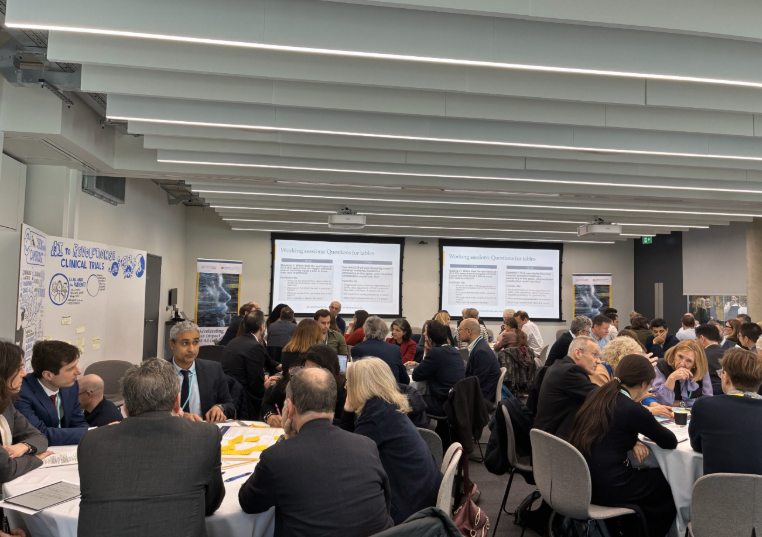
Cambridge University Health Partners (CUHP) and the Cambridge Centre for AI in Medicine (CCAIM) recently brought together 70 influential leaders from 45 organisations across the pharmaceutical, tech and academic sectors for the Partnering with Cambridge: AI to Revolutionise Clinical Trials event at the Ray Dolby Centre in Cambridge. The day was filled with dynamic conversations on how artificial intelligence (AI) can change the way clinical trials are conducted – making them faster, more cost-effective, more successful and more accessible for patients.
The event was hosted by Lord James O’Shaughnessy, Chair of CUHP and leader of the independent review of UK commercial clinical trials, who guided delegates through the packed agenda. The day was divided into two highly interactive working sessions that allowed delegates to dive deep into key topics that could shape the future of clinical trials.
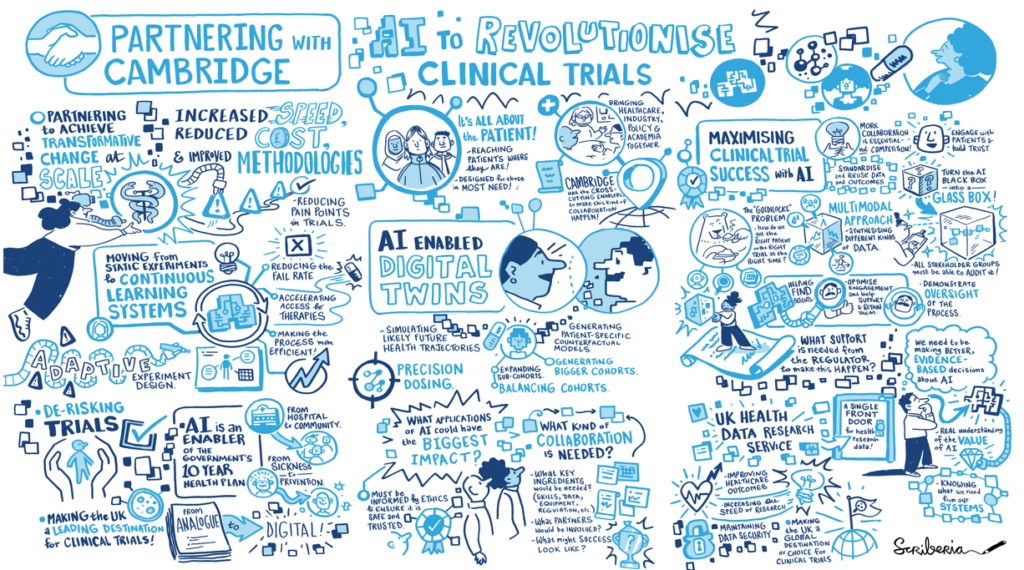
Human-less trials: The role of AI-enabled digital twins
The first session focused on exploring the potential of AI-enabled digital twins. Discussions revolved around several key themes, including:
- gene context drift
- data-enabled trials
- the potential for digital twins to replace external control arms
- the ethical aspects of using digital twins in trials.
Maximising clinical trial success with AI
Following that, the second working session, sparked conversations on a range of topics, such as:
- real-world data and how to facilitate access for clinical trials
- responsible AI for clinical trials in neurodegenerative disorders, using adaptive designs as a blueprint for ethical AI-driven trials
- recruitment and retention – whether AI is the answer?
- regulatory insights on working with regulators on adaptive trials.
Insights from key speakers
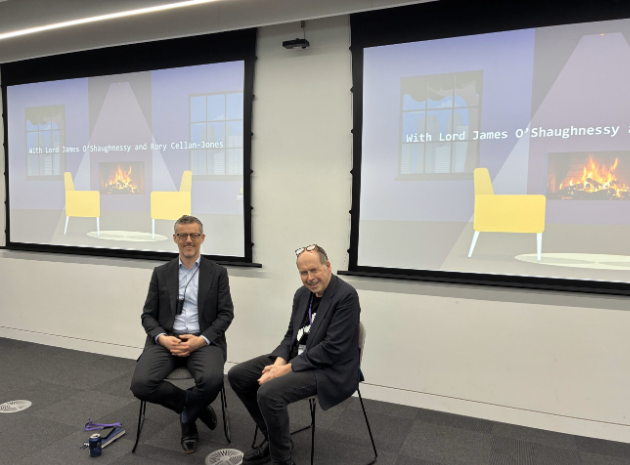
Among the key speakers was Rory Cellan-Jones, former BBC technology correspondent, patient advocate and now award-winning podcaster. He shared his personal journey with Parkinson’s disease and the frustrations with the slow progress in finding effective treatments. Diagnosed in 2019, Rory is currently analysing the role AI could play in treating and curing the disease, for a new book he is writing. He emphasised the potential of real-world data and AI-driven trial designs to refine treatments and speed up progress. However, he also highlighted the need for greater patient trust in these technologies, calling for better communication and transparency around AI’s role in healthcare.
Other key speakers included:
- Lucy Chappell, Chief Scientific Adviser, Department of Health and Social Care
- Alastair Denniston, Chair of the National AI Commission, who is also advising the UK’s new Health Data Research Service
- Professor Richard Gilbertson, Li Ka Shing Chair Oncology, University of Cambridge
- Mel Ivarsson, CEO of the Health Data Research Service
- Philippa Kirkpatrick, Chief Information Officer, Cambridge University Hospitals
- Zoe Kourtzi, Professor of Cognitive Computational Neuroscience, University of Cambridge
- Andrea Manfrin, Deputy Director, Clinical Investigations and Trials, Medicines and Healthcare products Regulatory Agency
- Professor Eoin McKinney, Faculty member, Cambridge Centre for Artificial Intelligence in Medicine
- Barbara Pierscionek, Deputy Dean Research and Innovation, Anglia Ruskin University
- Silas Ruhrberg Estevez, Machine Learning Research, University of Cambridge
- Mark Toshner, Clinical Director, The Victor Phillip Dahdaleh Heart & Lung Research Institute
- Professor Mihaela van der Schaar, Director of Cambridge Centre for AI in Medicine (CCAIM)
- Sofia Villar, Group Leader, MRC Biostatistics Unit
A key highlight for some delegates was the chance to tour the DAWN supercomputer, one of the most advanced AI research platforms. The tour provided a behind-the-scenes look at how the supercomputer operates, showcasing its potential to accelerate clinical trials and healthcare innovations.
Cambridge has all the ingredients to lead the charge in AI for healthcare. Learn more about the AI expertise across Cambridge in our prospectus.